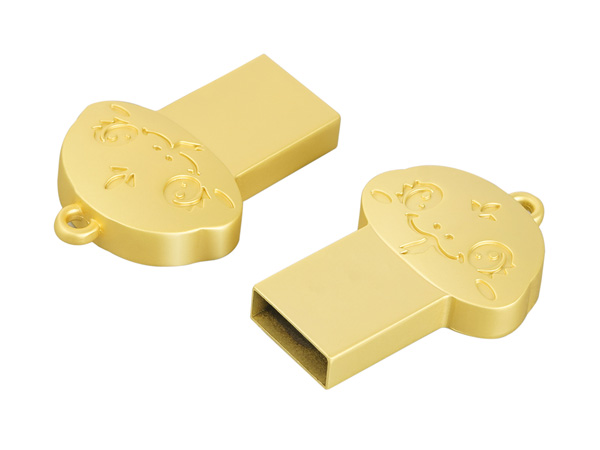
Optical module structural parts
Optical module structural parts
HDMI structural components have significant advantages in signal transmission, which stem from their precise physical design, advanced signal processing technology and strict electromagnetic compatibility standards. The following is a detailed analysis of the specific advantages
1. High speed and large bandwidth: Supports ultra-high-definition content transmission
High bandwidth capability
HDMI 2.1 standard: Supports 48 Gbps bandwidth, which is 2.67 times that of HDMI 2.0 (18 Gbps), and can lossless transmit 8K@60Hz or 4K@120Hz videos, meeting the future ultra-high-definition display requirements.
Dynamic bandwidth allocation: Through FRL (Fixed Rate Link) technology, the bandwidth of each channel is dynamically adjusted to optimize the data transmission efficiency.
Low-latency transmission
ALLM (Auto Low Latency Mode) : The game console and TV automatically switch to the low latency mode, with an end-to-end latency as low as 5ms, enhancing the operation response speed.
VRR (Variable Refresh Rate) : Synchronously display the device's refresh rate with the game's frame rate, eliminating screen tearing and stuttering.
2. Differential signal transmission: Strong anti-interference ability
Differential pair design
TMDS channel: It uses 3 pairs of differential to transmit video signals (red, green, and blue) and 1 pair of differential to transmit clock signals. Differential signals transmit information through voltage differences and have a natural inhibitory effect on external electromagnetic interference (such as Wi-Fi and Bluetooth).
Common-mode suppression: The differential receiver only responds to voltage differences and ignores common-mode noise (such as power supply ripple), significantly improving signal integrity.
Impedance control and signal integrity
Precision wiring: The differential impedance is strictly controlled at 100Ω±10%, and signal reflection is avoided through rounded corners and ground wrapping.
Length matching: The differential pair line length deviation is ≤5mil, ensuring timing consistency and reducing inter-symbol interference (ISI).
Iii. Multi-channel Parallelism and Functional Integration: Efficient utilization of bandwidth
Video, audio and control signals are transmitted synchronously
Video channel: TMDS differential pair transmits uncompressed RGB/YUV video signals, supporting 10-bit and 12-bit color depth (HDR).
Audio embedding: Utilizing redundant positions in video channels to transmit multi-channel audio (such as Dolby TrueHD, DTS-HD Master Audio) without the need for additional cables.
Auxiliary channel: The DDC (I²C bus) reads the EDID information of the display device, and the CEC channel realizes the interlocking control of the device (such as using a TV remote control to turn on and off a game console).
New function expansion
HEAC channel: Integrates Ethernet (100Mbps) and Audio Return (eARC), supporting TV to transmit audio in reverse to the audio system.
QMS (Quick Media Switching) : Eliminates black screen time when switching video sources (such as from streaming media to games), enhancing user experience.
Iv. Electromagnetic Compatibility (EMC) Design: Suppressing Radiation and Interference
Fully shielded structure
Metal casing: 360° fully enclosed design, creating a Faraday cage effect to block external electromagnetic interference (such as mobile phone signals, microwave oven radiation).
EMI spring: Elastic contacts are designed at the contact point between the housing and the PCB to ensure grounding continuity and reduce radiation leakage (in compliance with FCC Part 15 and CISPR 32 standards).
The power supply and signal are isolated
Independent power supply path: The +5V power supply line is separated from the signal line, and the power supply ripple (<50mV) is suppressed through a filter capacitor (0.1μF).
HPD circuit optimization: A pull-up resistor (10kΩ) is combined with a filter capacitor to prevent false trigger signals during hot plugging.
V. Signal Coding and Error Correction: Enhancing Transmission Reliability
8b/10b encoding
Dc balance: Encode 8-bit data into 10-bit symbols to ensure a balanced number of "0s" and "1s" in the signal and reduce low-frequency interference (such as baseline drift).
Clock recovery: The receiving end extracts the clock signal from the data stream without the need for a separate clock line, simplifying the wiring design.
Forward Error Correction (FEC
HDMI 2.1 introduction: By adding redundant data, it corrects bit errors during transmission and enhances the stability of long-distance transmission (such as optical fiber HDMI cables).
Six. Verify advantages in typical application scenarios
Home theater
4K HDR transmission: HDMI 2.0 components support 4K@60Hz, 10-bit color depth, HDR10/Dolby Vision, accurate color reproduction, no compression loss.
Audio return transmission: Through the ARC/eARC channel, TV audio (such as Netflix sources) is transmitted in reverse to the AV receiver to achieve Dolby Atmos surround sound effect.
Game entertainment
High refresh rate support: HDMI 2.1 structure supports 4K@120Hz, combined with VRR technology, to eliminate game screen tearing and enhance immersion.
Low latency mode: ALLM automatically activates the game mode, reducing input latency from 50ms to 5ms, meeting the demands of competitive gaming.
Business display
Long-distance transmission: Optical fiber HDMI structural components (such as 100 meters) transmit optical signals to avoid electromagnetic interference and ensure that 8K signals reach multiple displays without loss.
Multi-device collaboration: Through the CEC channel, one click can control the on/off of projectors, screens, audio systems and other devices, simplifying the operation process.
Summary
HDMI structural components have established an efficient and stable signal transmission system through high-speed differential transmission, multi-channel integration, electromagnetic compatibility design and intelligent error correction technology. Its advantages are not only reflected in the physical connection level, but also through continuous technological upgrades (such as the 48 Gbps bandwidth of HDMI 2.1) and functional expansions (such as VRR and QMS), it meets users' ultimate pursuit of picture quality, sound quality and interaction experience, and has become the core standard for audio and video transmission in the ultra-high-definition era.
Ding Dong:+86 136-2094-9831

Douyin
Copyright © 2025 Dongguan Laoyou Hardware Products Co., Ltd. All rights reserved
The webpage materials and related resources of this site are all from the Internet. If there is any infringement, please inform us immediately and we will delete it within 24 hours.