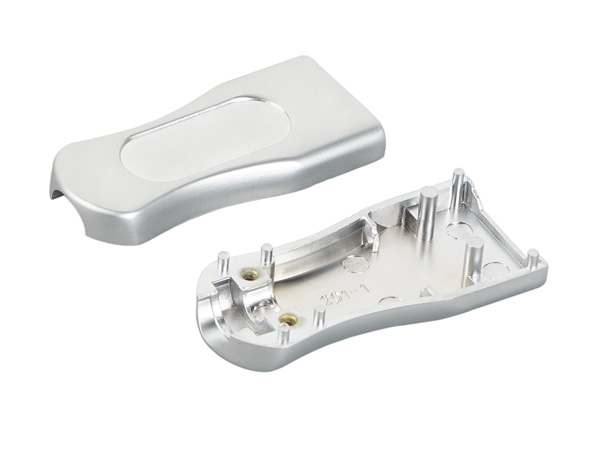
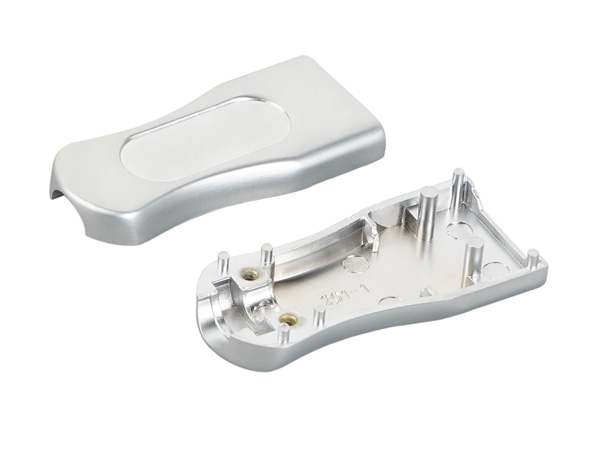
Optical module structural parts
Optical module structural parts
HDMI structural components mainly revolve around the design of HDMI interfaces, covering multiple aspects such as interface types, physical structures, signal transmission mechanisms, and key points of hardware design. The following is a detailed introduction:
Interface type and physical structure
HDMI interfaces are classified into four types based on size and application scenarios:
Type A (Standard Type) : The most common 19-pin interface, used for devices such as televisions, monitors, and graphics cards. The interface width is 13.9 mm and the thickness is 4.45 mm.
Type C (Mini) : 19-pin mini size interface, applied to portable devices such as digital cameras and portable video cameras, with A size nearly one-third smaller than that of Type A.
Type D (Micro Type) : 19-pin ultra-thin micro interface, measuring 2.8mm × 6.4mm, featuring a double-row pin design, similar to a miniUSB interface, mainly applied in small mobile devices such as mobile phones and tablet computers.
Type B (Professional Type) : 29-pin interface, width up to 21mm, transmission bandwidth twice that of Type A, capable of transmitting high-resolution signals equivalent to DVI Dual-Link (such as WQXGA 2560x1600 and above), only applicable in professional Settings.
Physically, the HDMI interface is wrapped in a metal casing, providing electromagnetic shielding and a fixed plug function. The interior is connected to 19 metal contacts on the plug through 19 small metal spring plates (sockets), and the contact materials are usually phosphor bronze base materials with nickel plating and gold plating to ensure contact reliability and corrosion resistance.
Signal transmission mechanism
The HDMI interface realizes its core functions through four pairs of differential signal lines:
Three pairs of TMDS data channels: They respectively transmit red, green and blue primary color video signals. Each channel adopts differential transmission technology, and the original signal is detected by the voltage difference between the positive and negative poles of the wires, effectively resisting electromagnetic interference. The TMDS protocol encodes the raw data, reducing the number of conversions from "0" to "1" or "1" to "0" in the data stream, lowering signal jitter and enhancing DC balance.
A pair of TMDS clock channels: Provide precise timing references to ensure that the receiving end can correctly parse the serial data stream.
Auxiliary signal channels: including CEC (Consumer Electronics Control) single-wire channels to achieve device interlocking control, DDC (Display Data Channel) to realize EDID information interaction based on the I²C protocol, and HPD (Hot Plug Detection) pins to monitor the connection status of devices.
Key points of hardware design
The design of HDMI modules should focus on ensuring signal integrity
Impedance control: The characteristic impedance of the differential signal line is strictly controlled within 100Ω±10%, and signal reflection is prevented by matching resistors and designing the transmission line.
Layout optimization: The differential pair wiring adopts arcs or 45° corners to reduce reflection, with the intra-group error controlled within 5mil and the inter-group error not exceeding 10mil. Both sides of the differential pair need to be ground wrapped, with the spacing maintained at 4 times the line width, and a common-mode choke should be added to suppress common-mode noise.
Power supply and protection: For +5V power supply, ensure that the ripple is less than 50mV and configure an overcurrent protection circuit. The HPD signal is stably detected through pull-up resistors and filter capacitors. ESD protection devices need to be installed in the interface area to prevent static damage.
Thermal management: High-speed HDMI 2.1 chips need to be equipped with heat sinks to ensure that the operating temperature does not exceed 85°C.
Version evolution and function expansion
The HDMI standard is continuously iterated to adapt to technological development:
HDMI 1.4: Supports 4K@30Hz resolution and ARC audio return function, and introduces an Ethernet channel to achieve device interconnection.
HDMI 2.0: Bandwidth increased to 18Gbps, supports 4K@60Hz and HDR10 high dynamic range, audio channels expanded to 32 channels.
HDMI 2.1: Bandwidth up to 48Gbps, supports 8K@60Hz and dynamic HDR, adds VRR variable refresh rate and ALLM automatic low latency mode, and enhances audio return capability through eARC.
Future direction: We are currently developing an ultra-high-speed interface supporting UHBR at 20Gbps/lane, integrating fiber channels to extend transmission distances, and introducing intelligent sensors to achieve hot-swappable status monitoring.
Ding Dong:+86 136-2094-9831


Douyin
Copyright © 2025 Dongguan Laoyou Hardware Products Co., Ltd. All rights reserved
The webpage materials and related resources of this site are all from the Internet. If there is any infringement, please inform us immediately and we will delete it within 24 hours.