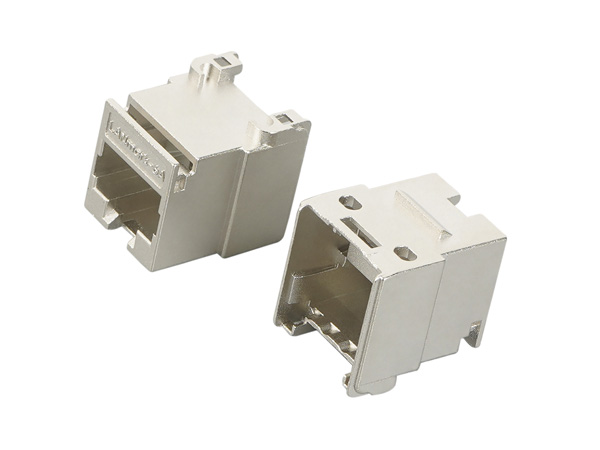
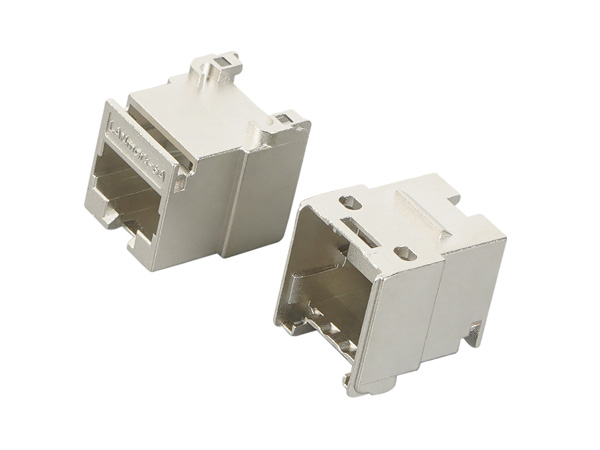
Optical module structural parts
Optical module structural parts
Connectors, as core components for signal, power or data transmission in electronic devices, have a wide range of application scenarios covering consumer electronics, industry, automobiles, aerospace, medical care and many other fields. The following are detailed descriptions of several main application scenarios:
In the field of consumer electronics
Smartphones and tablets
Charging interface: USB-C and Lightning interfaces enable synchronous transmission of power and data.
Headphone jack: 3.5mm or Type-C audio interface for connecting headphones to the device.
SIM card connector: Detachable or embedded card slot supports multi-operator switching.
Laptop
Expansion interfaces: HDMI, USB, Thunderbolt for connecting peripheral devices (monitor, hard disk).
Battery connector: Removable power transmission between the battery and the motherboard.
Wearable devices
Smartwatch charging dock: Magnetic connector enables wireless charging and data synchronization.
Typical case
Apple's Lightning interface supports both forward and reverse insertion through an 8-pin design, enhancing the user experience.
The USB4 connector supports 40Gbps data transmission and 100W power transmission, meeting the requirements of high-performance devices.
2. Industrial Automation and Control
Sensor and actuator connection:
M8/M12 circular connectors: Waterproof and dustproof (IP67), used for signal transmission in factory automation equipment such as PLCS and robots.
Heavy-duty connectors: Capable of carrying large currents (such as motor drives), they support quick replacement of modular devices.
Industrial Ethernet
RJ45/Profinet connectors: Enable high-speed data communication between devices (such as 100Mbps Ethernet).
Fieldbus system
DeviceNet/CAN connector: used for real-time control in automotive manufacturing and logistics systems.
Typical case
The Siemens S7-1200 series PLC achieves reliable connection between sensors and actuators through M12 connectors.
Kuka robots use heavy-duty connectors to support high-power drives of mechanical arms.
3. Automotive electronic systems
Power system
High-voltage battery connectors: Capable of withstanding hundreds of volts of voltage and supporting fast charging of electric vehicles (such as CCS standards).
Motor controller connector: Transmits large currents (such as over 300A) to drive motors.
Vehicle body electronics
In-vehicle entertainment system: HDMI/USB connectors support navigation and interconnection of multimedia devices.
Sensor network: CAN bus connectors enable communication between ECUs (Electronic Control Units).
Autonomous driving
Lidar/camera connector: High-speed data interfaces (such as GMSL) support real-time image transmission.
Typical case
The Tesla Model 3 adopts liquid-cooled high-voltage connectors to solve the heat dissipation problem of high current transmission.
The Bosch ESP system achieves vehicle stability control through CAN connectors.
4. Aerospace and National Defense
Airborne equipment
D-sub connector: Used for signal transmission in aviation instruments and navigation systems, it features an anti-vibration design.
Optical fiber connector: Supports high-speed data transmission (such as 10Gbps), reducing the weight of aircraft.
Satellite system
Radiation-resistant connectors: Utilizing special materials (such as ceramics) to resist space radiation.
Micro connector: Supports modular design for satellites, reducing launch costs.
Typical case
The Boeing 787 Dreamliner adopts the ARINC 600 connector to achieve high-density integration of the avionics system.
SpaceX Starlink satellites use micro-connectors to support large-scale constellation networking.
5. Medical equipment field
Imaging equipment
CT/MRI connector: It transmits high-resolution image data and needs to have low-noise characteristics.
Endoscope connector: Integrates power supply, image and pneumatic signals, supporting minimally invasive surgery.
Wearable medical care
Electrocardiogram (ECG) patch connector: Flexible design to fit the skin and transmit biological signals.
Surgical robot
High-precision connector: Supports real-time control of the robotic arm, with a delay of less than 1ms.
Typical case
The Da Vinci surgical robot adopts customized connectors to ensure stable communication between the robotic arm and the control console.
The Philips HeartStart defibrillator supports outdoor first aid use through a waterproof connector.
6. Energy and Infrastructure
Solar power generation
Photovoltaic connector: IP68 protection grade, suitable for harsh outdoor environments, supports direct current transmission.
Energy storage system: High-voltage DC connectors are used to connect battery packs with inverters.
Smart grid
Power line communication (PLC) connector: Transmits data through the existing power grid and supports the deployment of smart meters.
Typical case
Schneider Electric ComPacT connectors are used for fast strings in photovoltaic power stations.
State Grid adopts IEC 61850 standard connectors to achieve substation automation.
Summary: The core value of connectors
Connectors solve connection problems in different scenarios through standardized interfaces, modular design and environmental adaptability
Consumer electronics: Pursuing miniaturization, high-speed transmission and user experience.
Industry and automobiles: Emphasizing reliability, anti-interference and long-term stability.
Aerospace and medical: Emphasizing safety, lightweight and precise control.
Energy and Infrastructure: It needs to adapt to extreme environments and large-scale deployment requirements.
With the development of 5G, the Internet of Things and new energy technologies, connectors are evolving towards higher density, higher speed and greater intelligence, becoming a key basic component driving industry innovation.
Ding Dong:+86 136-2094-9831

Douyin
Copyright © 2025 Dongguan Laoyou Hardware Products Co., Ltd. All rights reserved
The webpage materials and related resources of this site are all from the Internet. If there is any infringement, please inform us immediately and we will delete it within 24 hours.