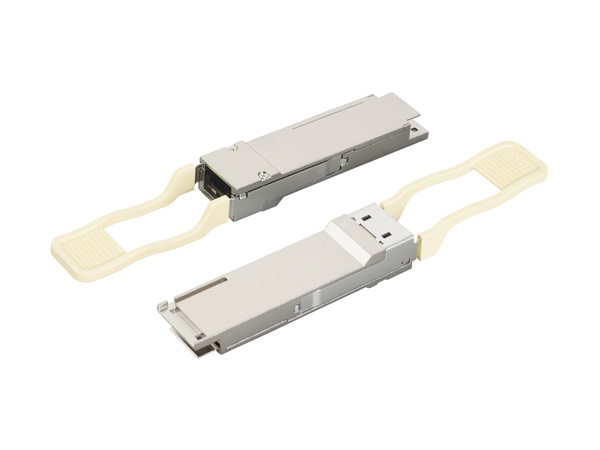
The structural components of optical modules achieve bidirectional conversion between electrical and optical signals through the coordinated operation of optoelectronic devices, functional circuits and optical interfaces. The core working principle can be divided into two processes: electro-optical conversion at the transmitting end and electro-optical conversion at the receiving end, as detailed below
I. Transmitting End (Electrical Signal → Optical Signal)
Electrical signal input and processing
External devices (such as switches and routers) send electrical signals of a certain bit rate to the optical module through electrical interfaces. This signal first enters the driver chip in the functional circuit, where it undergoes shaping, amplification and timing adjustment to ensure that the signal quality meets the requirements for laser driving.
Laser modulation and optical signal generation
The processed electrical signals drive semiconductor lasers (LDS, such as VCSEL, DFB, EML, etc.) or light-emitting diodes (leds) to emit modulated light signals that match the telecommunications number rate.
Laser type selection: Different laser types are selected based on the transmission distance and rate requirements. For instance, VCSEL (with a wavelength of 850nm) is commonly used for short-distance multimode transmission, while DFB or EML lasers (with wavelengths of 1310nm/1550nm) are employed for long-distance single-mode transmission.
Modulation method: Direct modulation (IM) or electrical absorption modulation (EAM) technology converts electrical signals into changes in light intensity to achieve the modulation of optical signals.
Optical signal coupling and output
The generated optical signal is focused and coupled to the optical fiber interface (such as LC, SC, MPO, etc.) through optical components like optical isolators (to prevent reflected light from interfering with the laser) and coupling lenses, and is ultimately transmitted through the optical fiber.
Ii. Receiving End (Optical Signal → Electrical Signal)
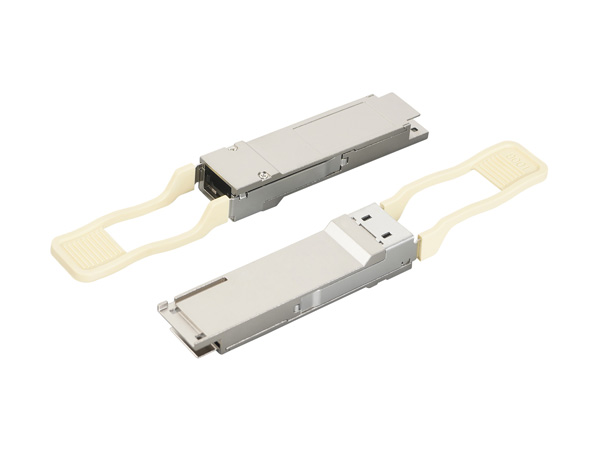
Optical signal input and coupling
The optical signal transmitted by the optical fiber enters the optical module through the optical interface, is focused by the coupling lens, and then illuminates the photosensitive surface of the photodetector (such as a PIN photodiode or an APD avalanche photodiode).
Convert optical signals into electrical signals
The photodetector converts the optical signal into a weak current signal, whose intensity is proportional to the incident light power.
Detector type selection: PIN detectors are suitable for short-distance, low-rate scenarios, while APD detectors enhance sensitivity through avalanche multiplication effect and are suitable for long-distance, high-rate transmission.
Electrical signal amplification and processing
The weak current signal first enters the transimpedance amplifier (TIA), where it is converted into a voltage signal and initially amplified. Subsequently, the limiting amplifier (LA) further shapes and controls the gain of the signal to eliminate noise interference and restore a clear electrical signal.
Digital Signal Processing (DSP) : In high-speed optical modules (such as 400G/800G), DSP chips perform dispersion compensation, clock recovery, and bit error correction on signals to ensure signal integrity.
Electrical signal output
The processed electrical signal is output to the external device through the electrical interface, completing the entire process of photoelectric conversion.
Iii. Key Performance Indicators and Optimization Techniques
Transmitting end indicators
Average emitted optical power: It reflects the output intensity of the laser and needs to be matched with the fiber loss.
Extinction ratio (ER) : The ratio of the optical power of all "1" codes to all "0" codes, characterizing the signal contrast and directly affecting the bit error rate.
Spectral characteristics: The stability of the central wavelength and spectral width affect the performance of multi-channel wavelength division multiplexing (WDM) systems.
Receiving end indicators
Receiving sensitivity: The minimum input optical power that the module can recognize, which determines the upper limit of the transmission distance.
Overload optical power: The maximum input optical power that the module can withstand to prevent detector saturation damage.
Receiving optical power range: The interval between sensitivity and overload optical power, reflecting the dynamic adaptability of the module.
Optimization technology
Temperature compensation: By means of digital potentiometers or K-factor compensation methods, the bias current and modulation current of the laser are dynamically adjusted to maintain the stability of optical power and extinction ratio.
Signal equalization: In high-speed transmission, feedforward equalization (FFE) or decision feedback equalization (DFE) techniques are adopted to compensate for optical fiber dispersion and loss.
Low-power design: By adopting linear drive pluggable (LPO) or photoelectric co-packaging (CPO) technology, the power consumption of DSP chips is reduced and energy efficiency is enhanced.