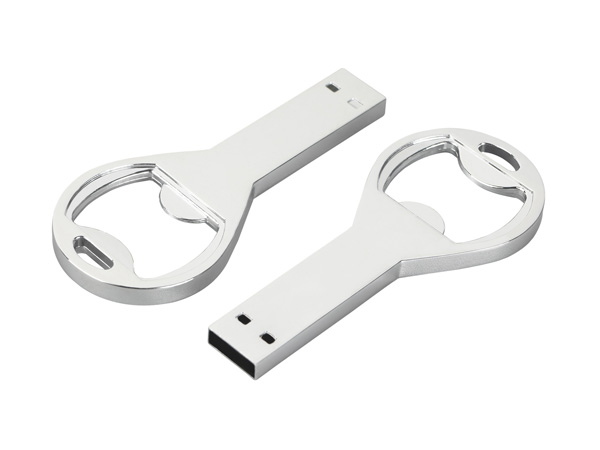
Optical module structural parts
Optical module structural parts
HDMI (High Definition Multimedia Interface) structural components are the core parts connecting display devices and signal sources, undertaking the task of lossless transmission of high-resolution audio and video signals. The design of its structural components needs to take into account signal integrity, electromagnetic compatibility (EMC), and mechanical reliability. The following is an introduction from five dimensions: physical structure, signal channel, version evolution, material process, and design key points:
I. Physical Structure: Standardized interface form
The HDMI interface adopts A standardized design. Taking the most common Type A (standard) interface as an example:
Interface form: 19-pin rectangular wide opening, wrapped in a metal casing to provide electromagnetic shielding and fix the plug.
Contact layout: There are 19 small metal spring plates (sockets) inside corresponding to the plug contacts, which are divided into core functional groups and other functional groups:
Core group: 3 pairs of TMDS data differential pairs (transmitting red, green, and blue video signals), 1 pair of TMDS clock differential pairs (providing timing reference), DDC (I²C bus, used for EDID/HDCP communication), HPD (hot plugging detection).
Other groups: CEC (Consumer Electronics Control), +5V power supply (for powering EDID), shielded ground, etc.
Ii. Signal Channel: Multi-protocol collaborative transmission
HDMI structural components achieve synchronous transmission of audio, video and control signals through multi-channel parallel operation
TMDS channel
Video transmission: Three groups of differential pairs respectively transmit red, green and blue video signals. Each group of differential pairs achieves DC balance through 8b/10b encoding to reduce signal jitter.
Audio embedding: The extra space in the R and G channels is used for transmitting audio signals (such as multi-channel PCM, Dolby Digital, etc.).
Clock synchronization: TMDS clock differential pairs provide precise timing references to ensure that the receiving end correctly parses the serial data stream.
DDC channel
Based on the I²C protocol, the source device reads the EDID information of the display device (such as resolution, refresh rate, color space, etc.) through the DDC and negotiates the best transmission parameters.
CEC channel
Device linkage is achieved through a single-line control network (such as controlling the on/off of a game console with a TV remote control).
HEAC channel (HDMI 1.4+)
Integrating Ethernet and audio backhaul functions, it supports the TV to transmit audio signals in reverse to the audio system.
Iii. Materials and Manufacturing Processes: High reliability Assurance
Contact piece material:
Base material: Phosphor bronze C5191 (hardness ≥200HV), ensuring durability during insertion and extraction.
Coating: Bottom nickel layer 2-3μm (diffusion barrier), top gold coating 0.2μm (contact surface), selective hard gold plating (0.5μm) in the pull-out area to reduce contact resistance.
Insulator material
LCP (liquid crystal polymer) : Dielectric constant ε=2.9@1GHz, suitable for high-frequency signal transmission.
High-temperature nylon (PA46) : UL94 V-0 flame retardant grade, enhancing safety.
Shell process
Zinc alloy die-casting (ZAMAK-3) : Surface nickel plating treatment, 360° fully enclosed EMI spring for electromagnetic shielding.
Precision stamping tolerance: ±0.03mm (key fit dimensions), ensuring signal integrity.
Ding Dong:+86 136-2094-9831


Douyin
Copyright © 2025 Dongguan Laoyou Hardware Products Co., Ltd. All rights reserved
The webpage materials and related resources of this site are all from the Internet. If there is any infringement, please inform us immediately and we will delete it within 24 hours.