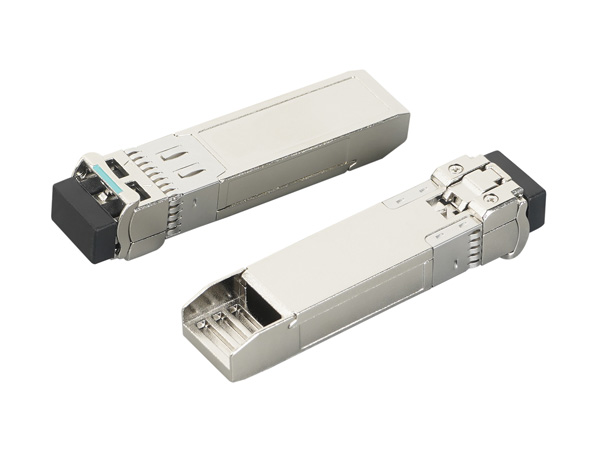
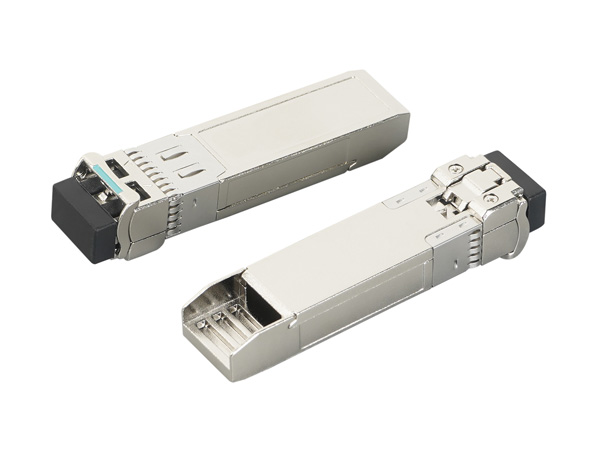
Optical module structural parts
Optical module structural parts
Optical module structural components, as the core components of optical communication systems, are applied in a wide range of scenarios, from data centers to telecommunication networks, enterprise-level communications, and even in special environments. The following is an analysis of the main application fields and specific scenarios of optical module structural components
I. Data Center: The Cornerstone of High-speed Interconnection
Interconnection of servers within the rack
Application scenario: High-speed data transmission between servers and switches within a data center.
Structural component requirements
Miniaturization and high density: It adopts compact packages such as SFP-DD and QSFP-DD, supporting single-module 400G/800G rates and enhancing port density.
Low-power design: Reduce energy consumption through silicon photonics technology or CPO (Optoelectronic Co-packaging) to meet the strict energy efficiency requirements of AI computing power clusters.
Thermal management: The combination of the metal casing and the heat sink ensures the stability of high-power modules (such as 800G modules with a power consumption of up to 15W) under dense deployment.
Interconnection between Data Centers (DCI
Application scenario: Long-distance optical fiber transmission across data centers (typically ≤80km).
Structural component requirements
Coherent optical module: Integrating DSP chip and tunable laser, it supports DWDM (Dense Wavelength Division Multiplexing) technology, achieving multi-wavelength multiplexing on a single fiber and enhancing transmission capacity.
High-sensitivity detector: It adopts APD (Avalanche Photodiode) to enhance the receiving sensitivity and compensate for signal attenuation during long-distance transmission.
Ii. Telecommunication Network: The Bridge between the backbone and access
5G fronthaul and midhaul
Application scenario: Optical fiber transmission between 5G base stations (AAU) and DU/CU.
Structural component requirements
Low cost and high reliability: It adopts 25G/50G gray optical modules or tunable color optical modules, supports the eCPRI protocol, and reduces latency and cost.
Industrial-grade design: Passed IP67 protection rating and temperature cycle test from -40℃ to 85℃, suitable for harsh outdoor environments.
Metropolitan area networks and backbone networks
Application scenarios: Urban core networks and cross-provincial long-distance transmission.
Structural component requirements
Coherent 100G/400G module: Supports C+L band expansion, with a single-fiber transmission capacity of up to 19.2Tbps, meeting the explosive growth demand of backbone network traffic.
Optical amplifier integration: Integrate EDFA (Erbium-doped fiber amplifier) within the module to extend the transmission distance to several thousand kilometers.
Iii. Enterprise-level and Campus Networks: Flexible Deployment Solutions
Interconnection of enterprise data centers
Application scenario: Optical fiber connection between the headquarters and branches of an enterprise.
Structural component requirements
Multi-rate compatibility: Supports 1G/10G/25G/100G multi-rate adaptive, reducing upgrade costs.
Simple management: Integrated digital diagnostic function (DDM), real-time monitoring of module temperature, voltage and other parameters through I2C interface, simplifying operation and maintenance.
Campus networks and intelligent buildings
Application scenarios: Fiber to the Desktop (FTTD) deployment in scenarios such as office buildings and campuses.
Structural component requirements
Low-cost optical interface: Utilizing LC or SC connectors, it is compatible with multimode optical fibers (OM3/OM4), reducing wiring costs.
Low-power design: By optimizing the circuit design, the module power consumption is controlled within 1W, adapting to POE (Power over Ethernet) applications.
Ding Dong:+86 136-2094-9831


Douyin
Copyright © 2025 Dongguan Laoyou Hardware Products Co., Ltd. All rights reserved
The webpage materials and related resources of this site are all from the Internet. If there is any infringement, please inform us immediately and we will delete it within 24 hours.